





Tyres
SUV Tyres vs Passenger Tyres: What’s the Real Difference?
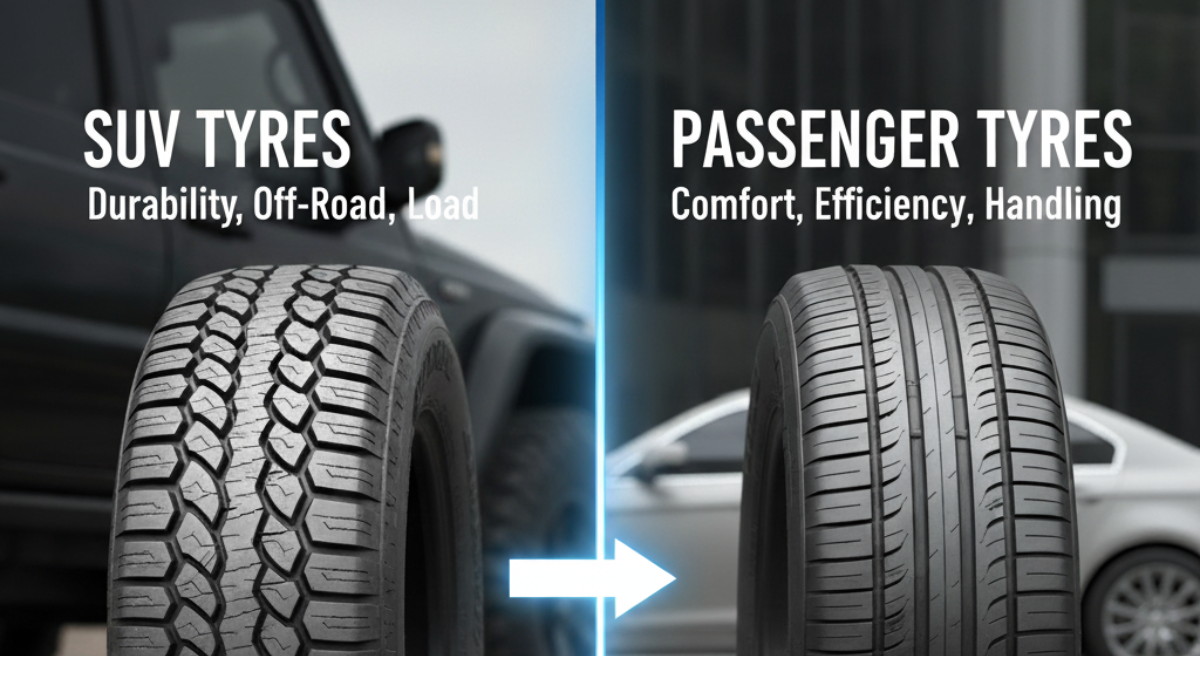
If you drive an SUV, 4x4, or a regular passenger vehicle, understanding these differences can help you choose the safest, most efficient, and longest-lasting tyres for your car.
1. Construction: Strength vs. Lightness
SUV Tyres
SUVs are heavier, taller, and carry more load, so SUV tyres are built with:
- Reinforced sidewalls
- Stronger internal construction
- Higher load index to support extra weight
They are designed to handle the vehicle’s extra mass without flexing too much, which improves stability.
Passenger Tyres
Passenger tyres are lighter and more flexible, offering:
- Better comfort
- Quicker response
- Lower rolling resistance for fuel efficiency
Because passenger cars weigh less, they don’t need the reinforced structure of SUV tyres.
2. Tread Pattern: Grip for Different Terrain
SUV Tyres
SUVs are expected to handle various road conditions. Their tread patterns are:
- Deeper
- Wider
- More aggressive
Many SUV tyres are also designed for light off-road, gravel, wet surfaces, and uneven roads.
Passenger Tyres
These tyres focus on:
- Smooth, quiet city and highway driving
- Wet-weather traction
- Fuel efficiency
Their tread patterns are designed for comfort and predictable grip on sealed roads.
3. Load Capacity: Built for More Weight
SUV Tyres
SUV tyres carry higher load ratings because SUVs:
- Are heavier
- Carry more passengers
- Often tow or haul gear
This makes reinforced sidewalls and stronger construction essential.
Passenger Tyres
Passenger tyres are built for:
- Lighter vehicles
- Lower carrying capacity
- Everyday city use
They prioritise comfort over heavy load support.
4. Handling & Stability
SUV Tyres
Because SUVs sit higher and have more body roll, their tyres are designed to:
- Improve cornering stability
- Reduce sway
- Offer better control at higher centres of gravity
Passenger Tyres
Passenger tyres enhance:
- Quick steering response
- Smooth turns
- Predictable braking on paved roads
They work well for smaller vehicles with low centres of gravity.
5. Durability & Lifespan
SUV Tyres
SUV tyres are generally more durable because they are built with:
- Harder compounds
- Tougher rubber
- Damage-resistant sidewalls
This helps them withstand rougher use and road conditions.
Passenger Tyres
Passenger tyres focus on:
- Comfort
- Softness
- Fuel efficiency
6. Fuel Efficiency & Rolling Resistance
SUV Tyres
Because they're larger and heavier:
- They create more rolling resistance
- Fuel economy is often lower
However, many modern SUV tyres now include low rolling resistance compounds to improve efficiency.
Passenger Tyres
Passenger tyres naturally offer:
- Better fuel efficiency
- Less rolling drag
- Smoother highway performance
Which Tyre Should You Choose?
Choose SUV Tyres if you:
- Drive an SUV, 4x4, or crossover
- Carry passengers or heavy loads
- Go off-road or drive on mixed terrain
- Want stronger, longer-lasting tyres
Choose Passenger Tyres if you:
- Drive a sedan, hatchback, or coupe
- Want maximum comfort
- Prioritise fuel efficiency
- Mostly drive on city or highways
Conclusion
SUV tyres and passenger tyres are engineered for different types of vehicles, road conditions, and driving styles. Choosing the right tyre ensures:
- Better safety
- Smoother performance
- Longer tyre life
- Improved fuel efficiency
- Share this:

-