





Tyres
Summer Tyres vs Winter Tyres: What’s the Difference?
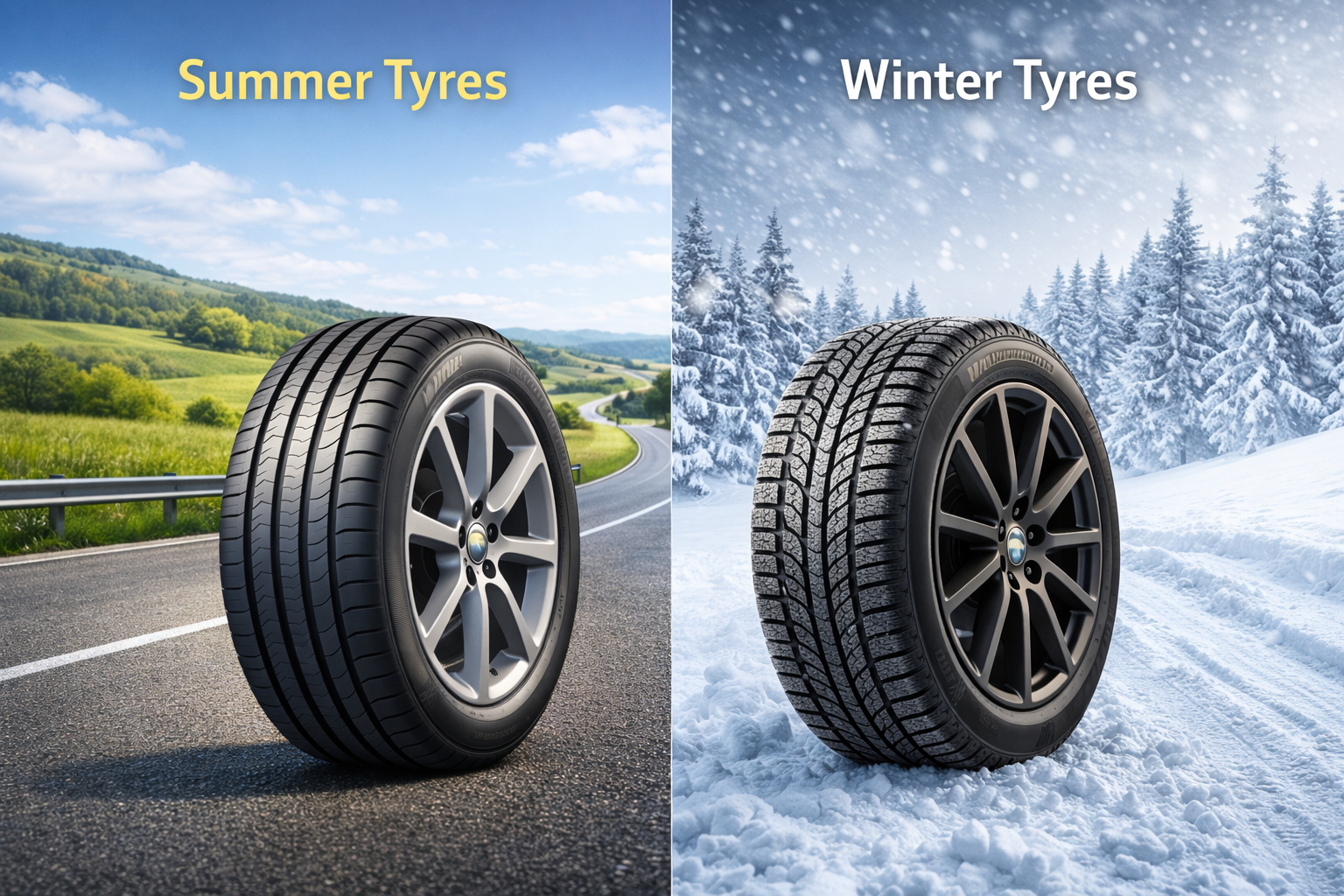
In this guide, we explain the key differences between summer and winter tyres and help you decide which option suits your vehicle. At Grip and Go Tyres, we help drivers choose the right tyres based on climate, driving style, and budget.
What Are Summer Tyres?
Summer tyres are engineered for warm weather conditions, typically above 7°C. They are designed to deliver excellent grip, handling, and braking performance on both dry and wet roads during warmer months.
Key Features of Summer Tyres
- Harder rubber compound that performs best in heat
- Shallow tread depth for better road contact
- Improved cornering stability
- Shorter braking distance in warm conditions
Summer tyres provide maximum road contact, which enhances steering precision and fuel efficiency. They are ideal for highway driving and city commuting during spring and summer seasons.
What Are Winter Tyres?
Winter tyres are specifically built for cold weather conditions, typically below 7°C. They remain flexible in low temperatures, providing better traction on snow, ice, and slush.
Key Features of Winter Tyres
-
Softer rubber compound that stays flexible in cold weather
-
Deeper tread patterns for improved grip
-
More sipes (tiny grooves) to enhance traction
-
Better performance on snow and icy roads
Winter tyres are designed to bite into snow and improve braking and control when roads become slippery.
Main Differences Between Summer and Winter Tyres
1. Rubber Compound
The biggest difference lies in the rubber composition.
-
Summer tyres use a harder compound that performs best in heat.
-
Winter tyres use a softer compound that remains flexible in freezing temperatures.
Using summer tyres in winter can result in reduced grip, while winter tyres in summer can wear out faster due to softer rubber.
2. Tread Design
Summer tyres have fewer grooves and a smoother tread pattern, maximizing contact with the road surface.
Winter tyres feature deeper grooves and additional sipes that help channel snow, slush, and water away from the tyre.
3. Performance in Different Temperatures
-
-
Above 7°C: Summer tyres perform better.
-
Below 7°C: Winter tyres offer superior traction and braking.
Temperature plays a bigger role than snowfall. Even on dry roads, winter tyres perform better in cold conditions.
-
4. Braking Distance
In warm conditions, summer tyres provide shorter braking distances.
In cold, icy, or snowy conditions, winter tyres significantly reduce braking distance compared to summer tyres.
Can You Use One Tyre All Year?
Some drivers prefer all-season tyres, which combine features of both summer and winter tyres. However, they are a compromise and may not perform as strongly as dedicated seasonal tyres in extreme conditions.
If you live in an area with harsh winters, switching between summer and winter tyres is the safest option.
If your region experiences mild winters without snow, summer tyres may be sufficient year-round.
Which Tyre Should You Choose?
Your choice depends on climate and driving conditions:
Choose Summer Tyres If:
- You drive mostly in warm weather
- Temperatures rarely drop below 7°C
- You prioritize fuel efficiency and dry-road handling
Choose Winter Tyres If:
- You experience freezing temperatures
- You drive on snow or icy roads
- Safety in slippery conditions is your priority
Cost and Longevity
Although switching tyres seasonally may seem expensive, it actually helps extend the lifespan of both sets. Using the correct tyre in the correct season reduces wear and improves overall performance.
At Grip and Go Tyres, we offer expert advice, professional fitting, balancing, and seasonal tyre change services to keep your vehicle safe year-round.
Conclusion
Understanding the difference between summer and winter tyres is essential for safe driving. Summer tyres deliver optimal performance in warm temperatures, offering better fuel efficiency and dry handling. Winter tyres provide superior grip, braking, and safety in cold, icy, and snowy conditions.
Choosing the right tyre for the season not only improves safety but also extends tyre life and enhances driving comfort. At Grip and Go Tyres, our team helps you select the best seasonal tyres for your passenger car, SUV, or 4x4. Visit Grip and Go Tyres today for expert guidance and professional tyre services tailored to your needs.
Frequently Asked Questions (FAQs)
1. What temperature should I switch to winter tyres?
You should switch to winter tyres when temperatures consistently drop below 7°C.
2. Can I use summer tyres in winter?
It is not recommended, as summer tyres lose flexibility in cold weather, reducing grip and safety.
3. Do winter tyres wear out faster in summer?
Yes, winter tyres can wear out quickly in hot weather due to their softer rubber compound.
4. Are winter tyres only for snow?
No, winter tyres are designed for cold temperatures and perform better even on dry roads in winter.
5. Does Grip and Go Tyres offer seasonal tyre change services?
- Share this:

-