





Tyres
Radial vs Bias Tyres: Which One Should You Choose?
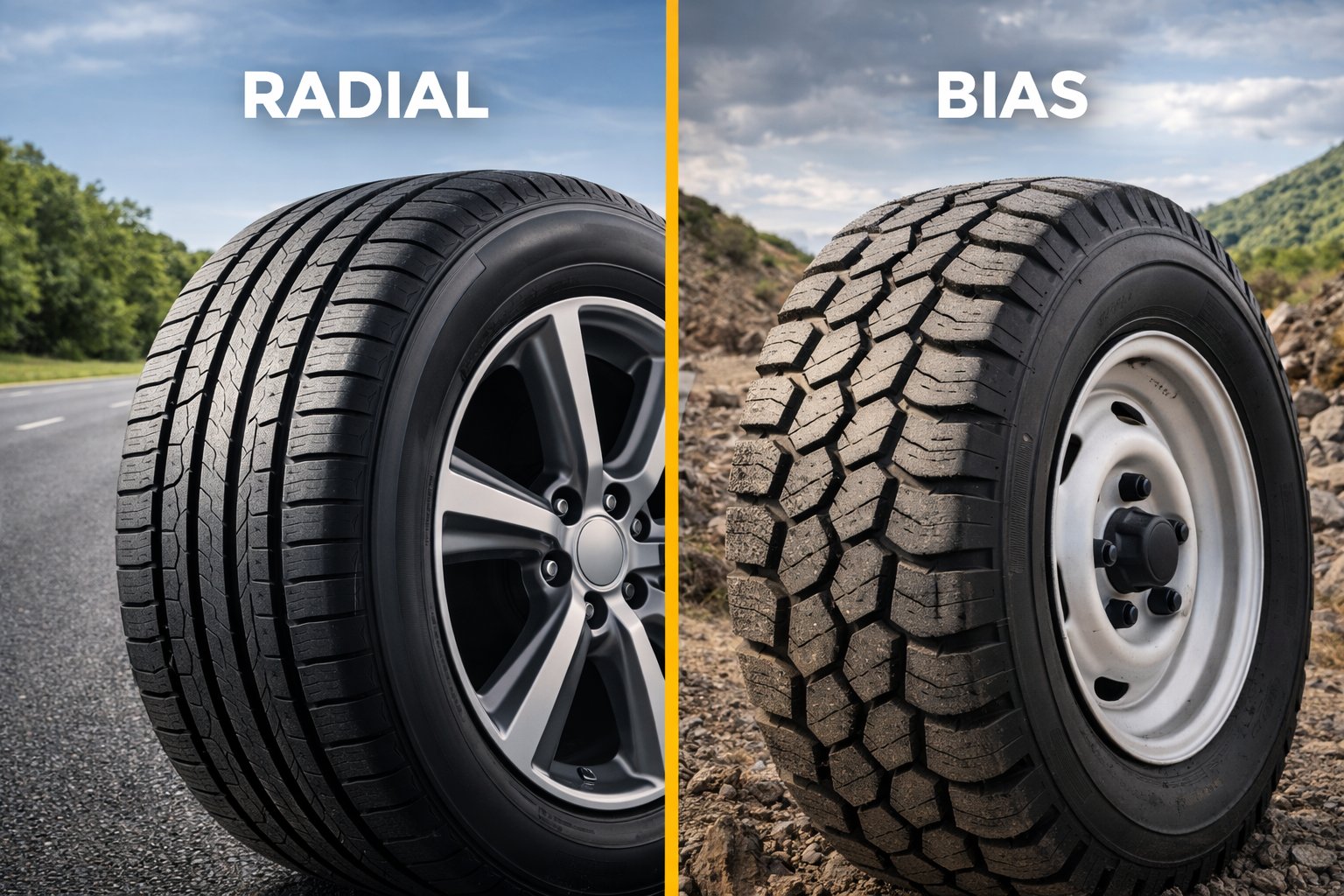
What Are Radial Tyres?
Radial tyres are the most widely used tyres in modern vehicles. They are designed with cords that run perpendicular (at a 90-degree angle) to the direction of travel.
Key Features of Radial Tyres
- Flexible sidewalls for better comfort
- Improved road grip and traction
- Lower rolling resistance
- Better heat dissipation
Advantages of Radial Tyres
- Enhanced fuel efficiency
- Longer tread life
- Superior handling and stability
- Smooth and comfortable ride
Radial tyres are ideal for passenger cars, SUVs, and highway driving due to their performance and durability.
What Are Bias Tyres?
Bias tyres, also known as cross-ply tyres, have cords that run diagonally across the tyre, typically at angles of 30–40 degrees.
Key Features of Bias Tyres
- Strong and rigid sidewalls
- Multiple overlapping layers (plies)
- Durable construction for heavy loads
Advantages of Bias Tyres
- Better resistance to cuts and punctures
- Suitable for rough terrains
- Strong load-carrying capacity
- Lower initial cost
Radial vs Bias Tyres: Key Differences
1. Construction
- Radial Tyres: Layers run perpendicular to the tread
- Bias Tyres: Layers run diagonally in a crisscross pattern
2. Comfort and Ride Quality
- Radial tyres offer a smoother and more comfortable ride due to flexible sidewalls.
- Bias tyres are stiffer, resulting in a slightly rougher ride.
3. Durability and Lifespan
- Radial tyres generally last longer because of even tread wear.
- Bias tyres may wear out faster but are tougher against external damage.
4. Fuel Efficiency
- Radial tyres have lower rolling resistance, improving fuel efficiency.
- Bias tyres have higher resistance, leading to more fuel consumption.
5. Load Carrying Capacity
- Radial tyres handle moderate loads efficiently.
- Bias tyres are better suited for heavy loads and rugged conditions.
6. Heat Resistance
- Radial tyres dissipate heat more effectively, making them suitable for long drives.
- Bias tyres tend to retain heat, which can affect performance over long distances.
7. Cost Comparison
- Radial tyres are usually more expensive upfront but offer better long-term value.
- Bias tyres are cheaper initially but may require more frequent replacement.
Which Tyre Should You Choose?
Choose Radial Tyres If You:
- Drive regularly on highways or city roads
- Want better fuel efficiency
- Prefer a comfortable and smooth ride
- Need long-lasting tyre
Choose Bias Tyres If You:
- Use your vehicle for heavy-duty or industrial work
- Drive on rough or uneven terrains
- Need stronger sidewalls for load handling
- Want a lower upfront cost
Conclusion
Both radial and bias tyres have their own strengths and applications. Radial tyres dominate the market due to their comfort, fuel efficiency, and durability, making them ideal for everyday use. On the other hand, bias tyres are built for strength and are better suited for heavy-duty and off-road conditions.
Ultimately, the right choice depends on your driving needs, budget, and vehicle type. For the best advice and tyre solutions, visit Grip and Go Tyres and let the experts help you make the right decision.
FAQs
1. What is the main difference between radial and bias tyres?
The main difference lies in their construction—radial tyres have perpendicular layers, while bias tyres have diagonal layers.
2. Which tyres last longer, radial or bias?
Radial tyres generally last longer due to better tread wear and heat dissipation.
3. Are radial tyres better for fuel efficiency?
Yes, radial tyres have lower rolling resistance, which helps improve fuel efficiency.
4. Where are bias tyres commonly used?
Bias tyres are used in heavy-duty vehicles, agricultural equipment, and off-road applications.
5. Where can I buy radial and bias tyres?
- Share this:

-