





Wheels
How Often Should You Get Your Wheels Aligned?
Many drivers wonder how often they should get their wheels aligned and whether alignment is necessary when their tyres appear to be in good condition. The answer depends on your driving habits, road conditions, vehicle type, and the manufacturer's recommendations.
As a general guideline, it is a good idea to check your wheel alignment every 10,000 to 12,000 kilometres or at least once a year. However, you may need an alignment sooner if you hit a pothole, strike a kerb, replace suspension components, or notice unusual tyre wear.
Understanding when to get your wheels aligned can help you avoid unnecessary tyre replacement costs and maintain better control of your vehicle.
How Often Should You Get Your Wheels Aligned?
Most vehicles benefit from having their wheel alignment checked at least once a year or every 10,000 to 12,000 kilometres. However, this is a general recommendation rather than a fixed rule for every vehicle. Always refer to your vehicle manufacturer's maintenance schedule for specific guidance.
You should consider checking your wheel alignment during the following situations:
- Every 10,000–12,000 kilometres: A periodic alignment check can help identify changes in wheel angles before they cause significant tyre wear.
-
Once a year: An annual inspection can help identify alignment issues caused by everyday driving.
-
When installing new tyres: Correct alignment helps protect your new tyres from premature and uneven wear.
-
After hitting a pothole or kerb: A strong impact can affect wheel angles or damage suspension and steering components.
-
After suspension repairs: Replacing components such as control arms, tie rods, or struts may require wheel alignment.
When you notice steering problems: A vehicle that pulls to one side or has an off-centre steering wheel may need an alignment inspection.
Regular checks are particularly useful if you frequently drive on uneven roads, carry heavy loads, or travel long distances.
What Is Wheel Alignment?
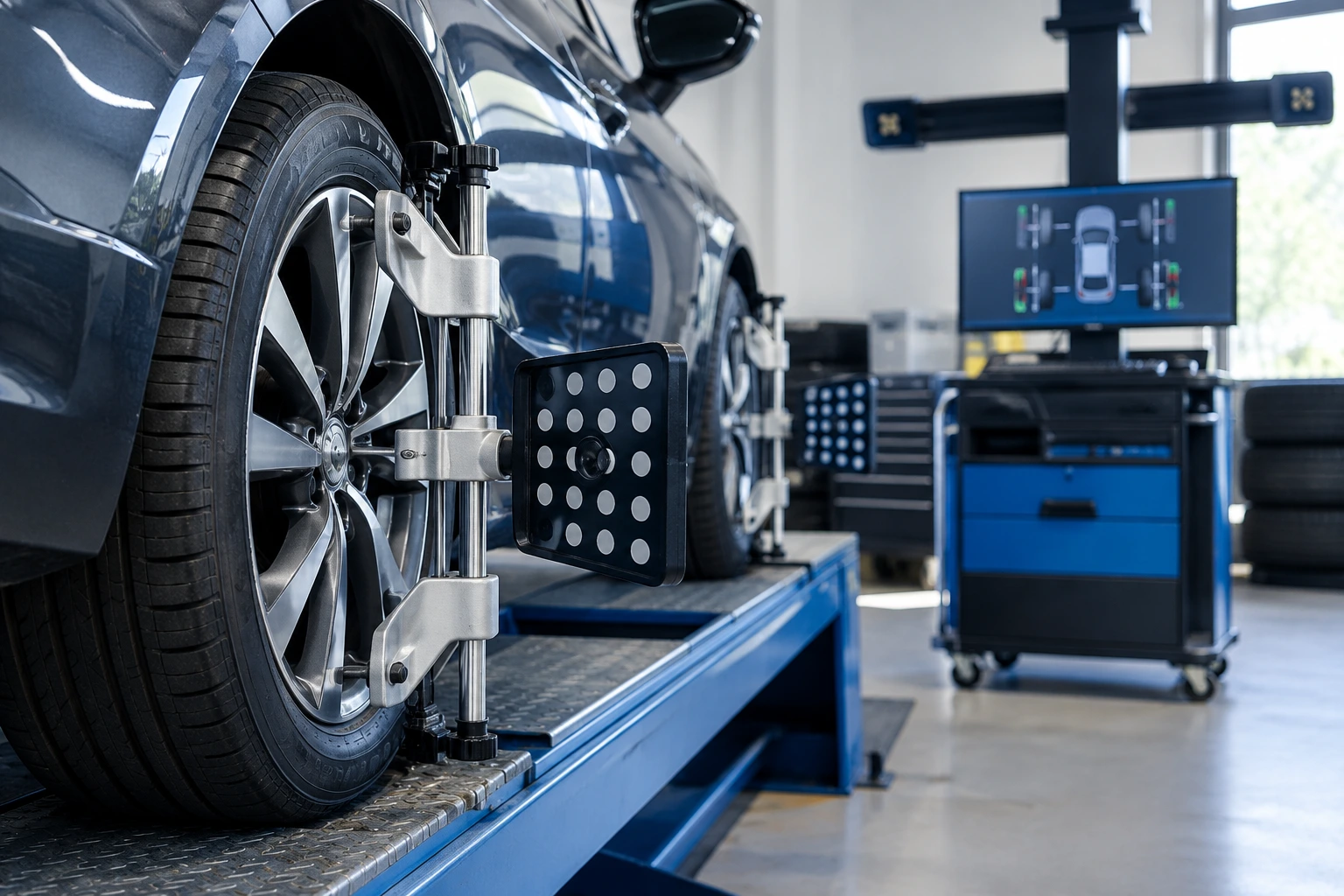
Wheel alignment refers to adjusting the angles of a vehicle's wheels so that they meet the manufacturer's specifications. It helps ensure that the tyres make proper contact with the road and that the vehicle travels in the intended direction.
Wheel alignment mainly involves three measurements.
Camber
Camber is the inward or outward tilt of a tyre when viewed from the front of the vehicle. Incorrect camber can cause uneven wear along the inner or outer edges of the tyre.
Caster
Caster refers to the angle of the steering pivot when viewed from the side of the vehicle. It influences steering stability, steering-wheel return, and how the vehicle tracks along a straight road.
Toe
Toe describes whether the front or rear wheels point slightly inward or outward when viewed from above. Incorrect toe settings can cause rapid tyre wear, including feathering across the tread.
A professional alignment service checks these angles and adjusts them where possible to meet the vehicle manufacturer's specifications.
Signs That Your Wheels Need Alignment
You do not always need to wait until your next scheduled service to check your wheel alignment. Certain warning signs may indicate that your vehicle needs attention.
Your Vehicle Pulls to One Side
If your vehicle consistently drifts or pulls to the left or right while driving on a reasonably level road, misalignment could be the cause. However, tyre pressure differences, tyre defects, road camber, and brake issues can also contribute to this problem.
Uneven Tyre Wear
Check your tyres regularly for unusual wear patterns. If one edge wears faster than the other or the tread shows excessive feathering, incorrect alignment may be responsible.
Uneven tyre wear can reduce tyre lifespan and may affect traction, particularly on wet roads.
The Steering Wheel Is Off-Centre
If your steering wheel is not straight when the vehicle travels straight, your wheel alignment may need checking. An off-centre steering wheel can also indicate issues with steering components or previous repairs.
Steering Feels Unstable
If your vehicle feels difficult to keep in a straight line or requires constant steering corrections, it is worth arranging an inspection. Alignment is one possible cause, but worn suspension components and tyre problems should also be considered.
Your Tyres Wear Out Too Quickly
Tyres that wear out much sooner than expected may have incorrect alignment, improper inflation, or another maintenance issue. Regular tyre inspections can help identify the underlying cause before you need to replace the tyres.
Why Is Regular Wheel Alignment Important?
Maintaining the correct wheel alignment offers several benefits for your vehicle and your driving experience.
Extends Tyre Life
Incorrect wheel angles can cause tyres to scrub against the road instead of rolling evenly. Correct alignment helps minimise avoidable uneven wear and allows you to get more value from your tyres.
Improves Driving Safety
Proper alignment supports predictable handling and stable steering. This can make the vehicle easier to control, especially during normal driving and lane changes.
However, alignment cannot compensate for worn tyres, damaged suspension parts, or incorrect tyre pressure.
Supports Fuel Efficiency
Misalignment can increase rolling resistance in some circumstances, potentially affecting fuel consumption. Correcting alignment may help reduce this unnecessary resistance, although the actual fuel-saving benefit varies.
Provides a More Comfortable Driving Experience
When your wheels are correctly aligned and your steering and suspension components are in good condition, your vehicle may track more consistently and require fewer steering corrections.
Helps Reduce Maintenance Costs
Regular alignment checks can help identify problems before they cause excessive tyre wear. Correcting alignment when necessary may reduce the risk of premature tyre replacement and additional expenses.
What Can Cause Wheel Misalignment?
Wheel alignment can change gradually or suddenly due to several factors.
-
-
Potholes: Hitting deep potholes can affect suspension geometry and damage steering or suspension components.
-
Kerb impacts: Striking a kerb while parking or turning can alter wheel angles.
-
Worn suspension components: Damaged bushings, ball joints, tie rods, and other parts can affect alignment.
-
Accidents or collisions: Even minor impacts can affect steering and suspension geometry.
-
Rough road conditions: Regular driving on uneven surfaces can contribute to wear and alignment changes over time.
-
Suspension modifications: Changes to ride height or suspension components may require alignment adjustments.
If your vehicle experiences a significant impact, have it inspected even if you do not immediately notice a steering problem.
How Can You Maintain Proper Wheel Alignment?
-
Check tyre pressure regularly: Maintain the recommended pressure specified by your vehicle manufacturer.
-
Inspect tyre tread: Look for uneven wear, cuts, bulges, and other visible damage.
-
Drive carefully over potholes: Slow down where safe and avoid sudden impacts with road hazards.
-
Follow your maintenance schedule: Include alignment checks as part of routine tyre and vehicle maintenance.
-
Inspect your suspension: Have unusual noises, steering looseness, or handling changes checked by a qualified technician.
-
Check alignment after relevant repairs: Ask whether alignment is required after steering or suspension work and when fitting new tyres.
-
-
Conclusion
Knowing how often to get your wheels aligned can help you maintain better handling, improve driving comfort, and extend the life of your tyres. As a general guideline, check your wheel alignment every 10,000 to 12,000 kilometres or once a year, while following your vehicle manufacturer's recommendations. You should also arrange an inspection if you notice uneven tyre wear, steering problems, or if your vehicle hits a pothole or kerb.
Regular tyre maintenance and professional inspections can help you identify alignment problems early and avoid unnecessary expenses. For reliable tyre care, alignment checks, and expert assistance, Grip and Go Tyres can help you maintain your vehicle's tyre performance and enjoy a smoother driving experience. Contact Grip and Go Tyres to arrange an inspection and keep your vehicle ready for the road.
Frequently Asked Questions
- How often should you get your wheels aligned?
You should generally check your wheel alignment every 10,000 to 12,000 kilometres or at least once a year. You may need an earlier inspection after hitting a pothole, replacing suspension components, or noticing uneven tyre wear.
2. What are the signs that your wheels need alignment?
Common signs include your vehicle pulling to one side, an off-centre steering wheel, uneven tyre wear, and difficulty maintaining a straight driving direction. A professional inspection can confirm the cause.
3. Should you get a wheel alignment when replacing tyres?
Yes, it is a good idea to check your wheel alignment when installing new tyres. Correct alignment helps prevent avoidable uneven wear and supports stable handling, although an adjustment is only necessary if the measurements are outside the specified range.
4. Can I drive with misaligned wheels?
You may be able to drive a short distance with minor misalignment, but it can cause uneven tyre wear and affect handling. If your vehicle pulls strongly, the steering feels unstable, or you suspect suspension damage, arrange an inspection promptly and avoid driving if it feels unsafe.
5. Does wheel alignment improve fuel efficiency?
Correct wheel alignment can help reduce unnecessary rolling resistance caused by certain alignment problems. However, the effect on fuel efficiency varies depending on the severity of misalignment, tyre pressure, driving conditions, and vehicle condition.
- Share this:

-