





Tyres
All-Terrain vs Highway Tyres: Which Is Right for Your Drive?
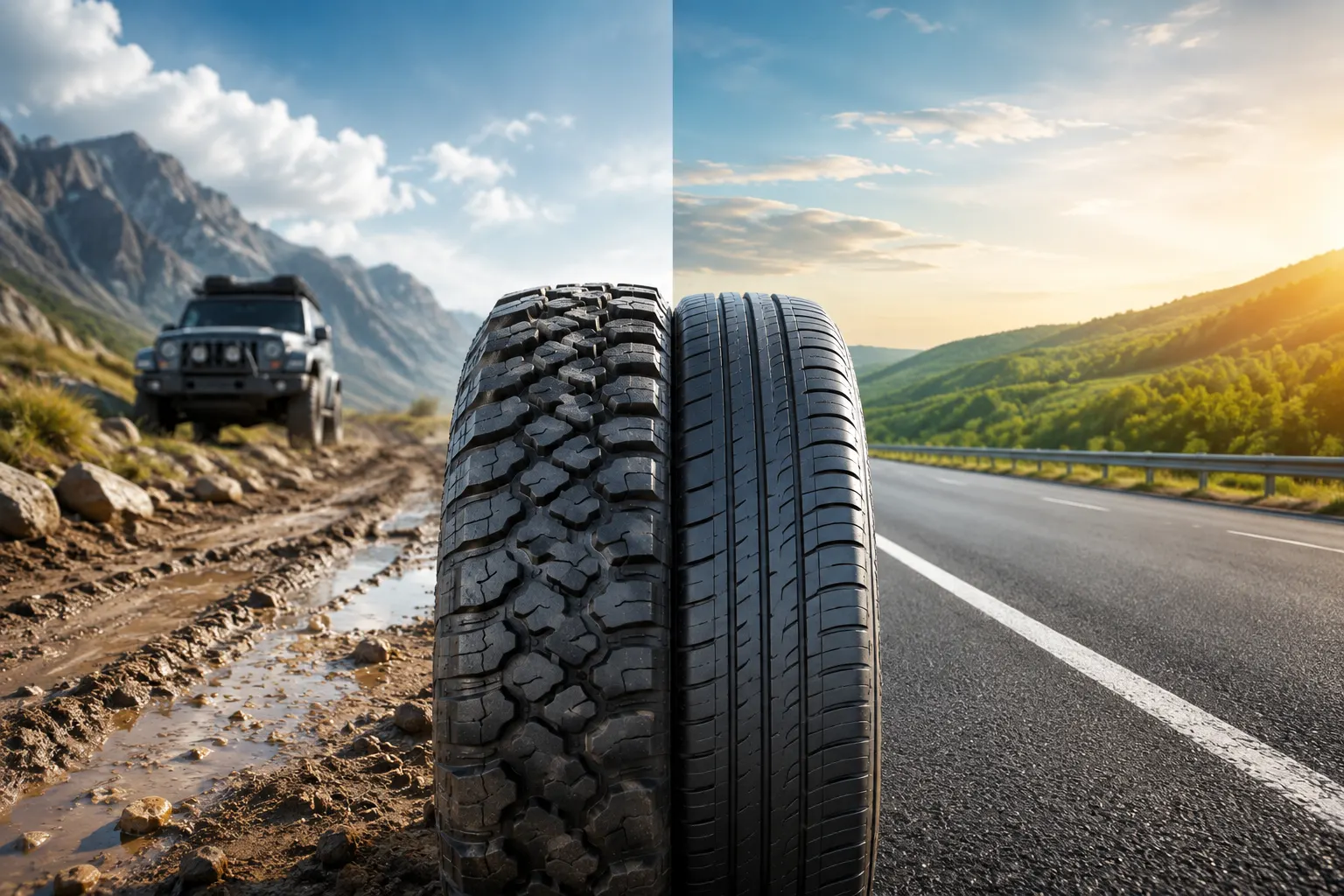
All-terrain tyres are built to handle a combination of paved roads, gravel, mud, sand, and light off-road conditions. Highway tyres, on the other hand, are primarily designed for smooth roads, highways, and urban driving. Understanding their differences can help you select tyres that match your vehicle usage and driving environment.
What Are All-Terrain Tyres?
All-terrain tyres, often called A/T tyres, are designed to provide balanced performance on both paved and unpaved surfaces. They typically feature deeper tread patterns, reinforced construction, and wider grooves that help provide traction on loose or uneven terrain.
These tyres are a popular choice for SUV and pickup owners who regularly drive in cities but also travel on gravel roads, construction sites, rural roads, or light off-road trails.
The tread design of all-terrain tyres allows them to maintain reasonable road manners while providing additional grip when the surface becomes rough or slippery.
What Are Highway Tyres?
Highway tyres, commonly known as H/T tyres, are designed mainly for paved roads and long-distance highway driving. Their tread patterns are generally optimized for smoothness, stability, comfort, and fuel efficiency.
Highway tyres usually have a more road-focused tread pattern with continuous contact areas that provide good stability at higher speeds. They are ideal for drivers who spend most of their time commuting through cities, driving on highways, or taking long road trips.
If your vehicle rarely leaves paved roads, highway tyres may provide a more comfortable and efficient driving experience.
All-Terrain vs Highway Tyres: Key Differences
The biggest difference between these two tyre types is their intended driving environment.
1. Road Performance
Highway tyres are optimized for paved roads. Their tread design provides excellent road contact, stable handling, and predictable braking on highways and urban roads.
All-terrain tyres can also perform well on paved roads, but their more aggressive tread pattern is designed to provide additional versatility. They are particularly useful when your driving involves both roads and occasional off-road surfaces.
2. Off-Road Capability
This is where all-terrain tyres have a clear advantage.
Their deeper and more open tread patterns provide improved traction on gravel, dirt, sand, mud, and uneven surfaces. Reinforced construction can also provide additional resistance against damage when driving over rough terrain.
Highway tyres are not designed for serious off-road driving. Using them regularly on rocky or muddy surfaces can result in reduced traction and faster tread wear.
3. Driving Comfort
Highway tyres generally provide better comfort on paved roads. Their tread patterns are designed to reduce road noise and provide a smoother ride.
All-terrain tyres can be slightly noisier because of their more aggressive tread blocks. However, modern A/T tyres have improved significantly, and many provide a comfortable driving experience on normal roads.
If quiet and smooth highway driving is your priority, H/T tyres are generally the better choice.
4. Fuel Efficiency
Highway tyres can offer an advantage in fuel efficiency because they are designed with lower rolling resistance and optimized tread patterns.
All-terrain tyres may have greater rolling resistance because of their heavier construction and more aggressive tread. This can potentially affect fuel consumption, particularly during frequent city and highway driving.
For drivers who prioritize fuel economy, highway tyres are generally worth considering.
5. Wet Road Performance
Both tyre types can provide good wet-road performance when properly designed and maintained, but their characteristics can differ.
Highway tyres often feature grooves designed to efficiently move water away from the contact patch, helping maintain grip on wet highways.
Some modern all-terrain tyres also provide strong wet-road performance, but their primary advantage is versatility across different surfaces. Always consider the specific tyre model, tread design, and wet-grip rating rather than choosing solely based on tyre category.
Which Tyres Are Better for Long-Distance Driving?
If you frequently travel long distances on highways, highway tyres are usually the better option. They are designed for stable high-speed driving, reduced road noise, improved comfort, and efficient performance.
For example, if your SUV is mainly used for commuting between cities and most of your driving takes place on paved roads, H/T tyres can provide the comfort and road stability you need.
Which Tyres Are Better for Off-Road Driving?
If your vehicle regularly travels on gravel, dirt, sand, construction roads, or trails, all-terrain tyres are generally more suitable.
They offer better versatility and traction across changing surfaces. However, all-terrain tyres should not automatically be considered the best choice for extreme off-road conditions. Drivers who frequently tackle deep mud, rocks, or challenging trails may need specialized mud-terrain or off-road tyres.
Which Tyres Are Better for City Driving?
For drivers who primarily use their SUV or pickup in urban areas, highway tyres are often the practical choice.
They provide a smooth ride, lower road noise, good handling, and efficient performance on paved streets. If occasional trips involve rough roads or light off-road conditions, all-terrain tyres can provide additional versatility.
Consider Your Driving Habits Before Choosing
Instead of choosing tyres based solely on their name, consider how and where you drive.
Ask yourself:
- How much time do you spend driving on highways?
- Do you regularly travel on gravel or dirt roads?
- Do you drive in muddy or sandy conditions?
- Is low road noise important to you?
- Do you prioritize fuel efficiency?
- How frequently do you travel long distances?
- Do you need additional off-road traction?
If most answers point toward paved roads and highways, H/T tyres may be the right fit. If your driving involves a mixture of paved roads and off-road surfaces, A/T tyres could provide greater versatility.
How to Choose the Right Tyre Size
Regardless of whether you select all-terrain or highway tyres, choosing the correct tyre size is essential. Check your vehicle manufacturer's recommended tyre size and load specifications before purchasing.
The tyre size, load index, speed rating, and construction should be compatible with your vehicle. Using the wrong tyre specifications can affect handling, braking, ride quality, and safety.
It is also important to maintain the correct tyre pressure. Proper inflation can help improve handling, tread life, fuel efficiency, and overall tyre performance.
All-Terrain vs Highway Tyres: Which One Should You Choose?
There is no single answer because the right tyre depends on your driving requirements.
Choose highway tyres if you primarily drive on paved roads, highways, and city streets and want a quiet, comfortable, and fuel-efficient driving experience.
Choose all-terrain tyres if you need greater versatility and regularly travel across gravel, dirt, sand, or light off-road terrain while still using your vehicle on paved roads.
The key is to match the tyre to your actual driving conditions rather than choosing based on appearance or popularity.
Conclusion
The choice between all-terrain and highway tyres ultimately comes down to where and how you drive. Highway tyres are ideal for drivers who prioritize comfort, fuel efficiency, quiet operation, and stable performance on paved roads. All-terrain tyres are better suited to drivers who need additional versatility for mixed road and light off-road conditions.
Before making your decision, consider your driving habits, road conditions, vehicle specifications, and tyre requirements. GripandGo Tyres can help you explore suitable tyre options based on your vehicle and driving needs, making it easier to choose tyres that deliver reliable performance wherever your journeys take you.
Frequently Asked Questions
1. Are all-terrain tyres better than highway tyres?
Not necessarily. All-terrain tyres are better for mixed road and light off-road driving, while highway tyres are generally better for paved roads, comfort, fuel efficiency, and quiet performance.
2. Can I use all-terrain tyres for highway driving?
Yes. All-terrain tyres are designed to work on paved roads as well as off-road surfaces. However, they may produce more road noise and can have higher rolling resistance than highway tyres.
3. Are highway tyres suitable for off-road driving?
Highway tyres can handle normal paved roads and occasional light unpaved surfaces, but they are not designed for regular or challenging off-road driving. All-terrain tyres are generally more suitable for mixed terrain.
4. Which tyres provide better fuel efficiency?
Highway tyres generally provide better fuel efficiency because they are designed with road-focused tread patterns and lower rolling resistance. Actual fuel consumption also depends on the vehicle, tyre model, pressure, load, and driving habits.
5. How do I know which tyre is right for my SUV?
Consider where you drive most often. If you mainly use your SUV on highways and city roads, highway tyres may be ideal. If you regularly drive on gravel, dirt, sand, or light off-road terrain, all-terrain tyres may be a better choice.
- Share this:

-